
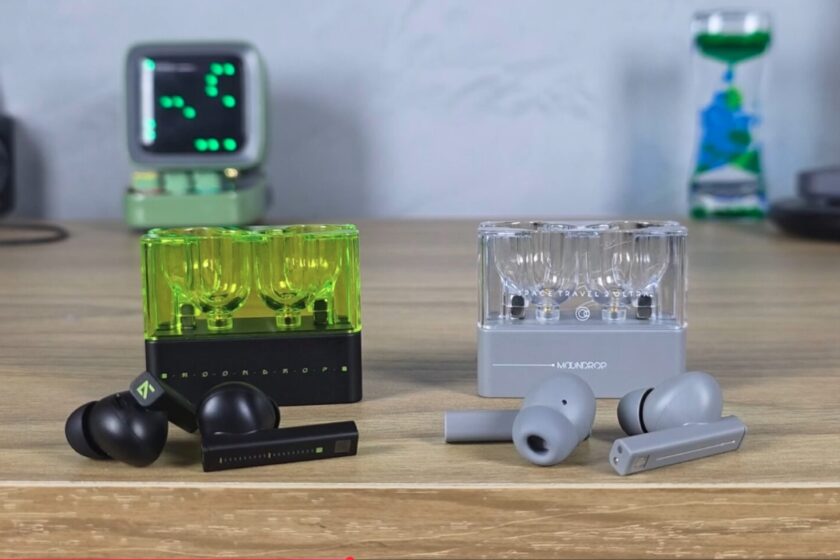
Where to buy
I bought both from the official Moondrop stores on AliExpress. Here are the links:
Space Travel 2 | Space Travel 2 Ultra
About two years ago, the original Moondrop Space Travel earbuds became popular among Brazilian audio enthusiasts on YouTube. They were true wireless models sold on AliExpress that drew attention for their low price, great sound profile, and handy features like active noise canceling (ANC). At the time, they cost under R$200 and were considered a top value-for-money pick.
Now, Moondrop has released their successors: the Space Travel 2 and Space Travel 2 Ultra. I bought both for around US$30-40 — reasonable prices overall.
What changed from the first version
In general, the new models bring:
-
Louder sound output (a common complaint with the first version)
-
Simultaneous connection to two devices (the previous one didn’t have this)
-
An app with extra settings like gain control and ANC mode options
-
Updated Bluetooth: from 5.3 to 6.0
-
Claimed battery improvements (from about 4h to up to 7h)
-
In the Ultra model, LDAC codec support and planar magnetic drivers, which theoretically should deliver higher audio fidelity
Build and ergonomics
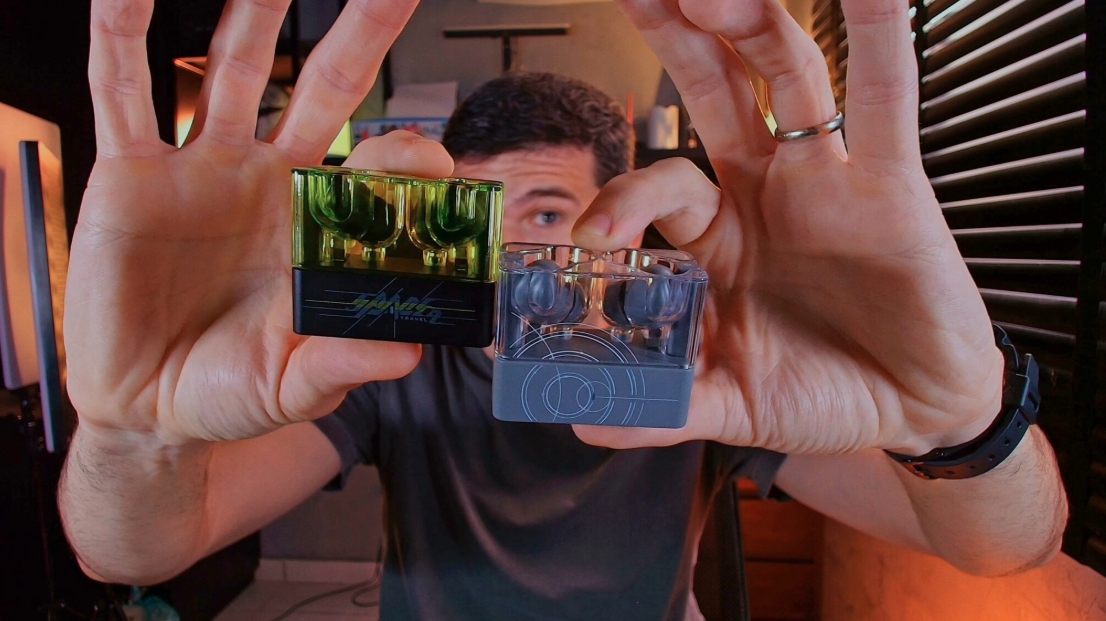
The design remains the same: a transparent case with a top opening, which leaves the earbuds more exposed to dust. The brand sells protective covers, but they don’t seem worth the cost.
The touch controls are still there and respond to single, double, and triple taps, as well as touch-and-hold gestures. The Moondrop app lets you remap all of them, adjust EQ, tweak ANC settings, and more. There are a few new software options added for the latest models.
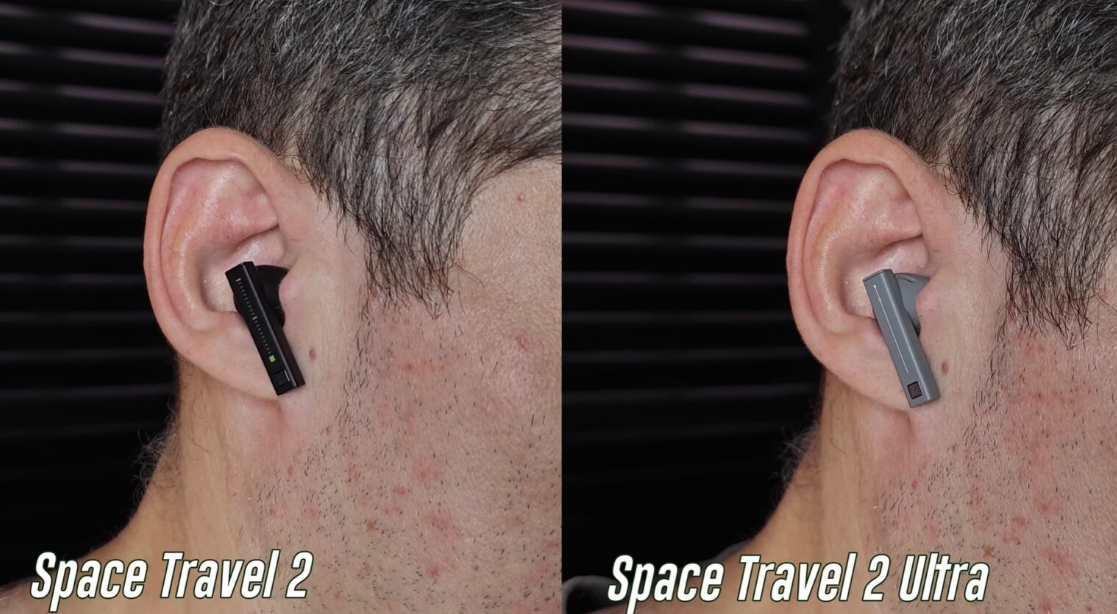
In terms of fit, I found the Ultra a bit more secure in the ear. That helps slightly with isolation and ANC effectiveness. Both are comfortable, but the Ultra has a small edge.
Noise canceling
There wasn’t a major leap here. The ANC is still a solid “7 out of 10”: good for music, cuts out a fair amount of background noise, but not on the level of premium brands.
The app lets you switch between ANC on, Ambient mode (which lets outside sounds through), and passive isolation only. Touch controls remain customizable, with plenty of combinations.
Connection and microphone
Bluetooth 6.0 offers stable connectivity, though there’s still a small delay in videos. The mic is fine for calls, with no noticeable improvement over the first gen. Outdoors in the wind, the audio struggles — you’ll hear pops and distortion.
Sound: better or worse? Just different.
The biggest upgrade is in volume. Both the Space Travel 2 and 2 Ultra are now loud enough, fixing one of the biggest complaints about the first model.
As for sound quality:
-
Space Travel (1st gen): classic V-shaped tuning — boosted bass and treble, easy to enjoy.
-
Space Travel 2: keeps that sound but with slightly more mids, which makes it more balanced for many listeners. Personally, I still prefer the first one’s sound.
-
Space Travel 2 Ultra: aims for a flatter profile, with less bass punch. It’s technically cleaner, but also less exciting. Despite the LDAC and planar drivers, I didn’t hear a meaningful real-world improvement.
In short: it’s not a linear upgrade. Each model has a different personality — not necessarily better or worse.
Battery
This was a bit disappointing. Despite the claim of up to 7 hours, in real use (ANC on) both the 2 and 2 Ultra lasted around 4.5–5 hours per charge. That’s only a minor gain over the original and still below some current competitors that actually hit 6–7 hours of real use.
Verdict
If you already own the first Space Travel and are fine with its volume, there’s no real need to upgrade — the sound is still great.
If the low volume bothered you, the Space Travel 2 fixes that issue, keeps the same tuning, and adds app features plus multipoint connection.
The Space Travel 2 Ultra is better suited for those who like a neutral sound without extra bass. For most people, though, it doesn’t offer a clear practical advantage over the regular 2.
For me personally, the Space Travel 2 is the pick. The louder output made a bigger difference than the subtle tuning shift. But as always with audio — perception is subjective. Everyone’s ears will lean a different way.